Why quotes don't line up
- Plant size. "Install 24 shrubs" can mean 3-gallon or 7-gallon, and the price is very different.
- Silence. If a quote doesn't mention haul-off or irrigation, you don't know whether it's in the price.
- Allowances. A placeholder amount can change, so it isn't a fixed price.
The lowest quote wasn't the cheapest
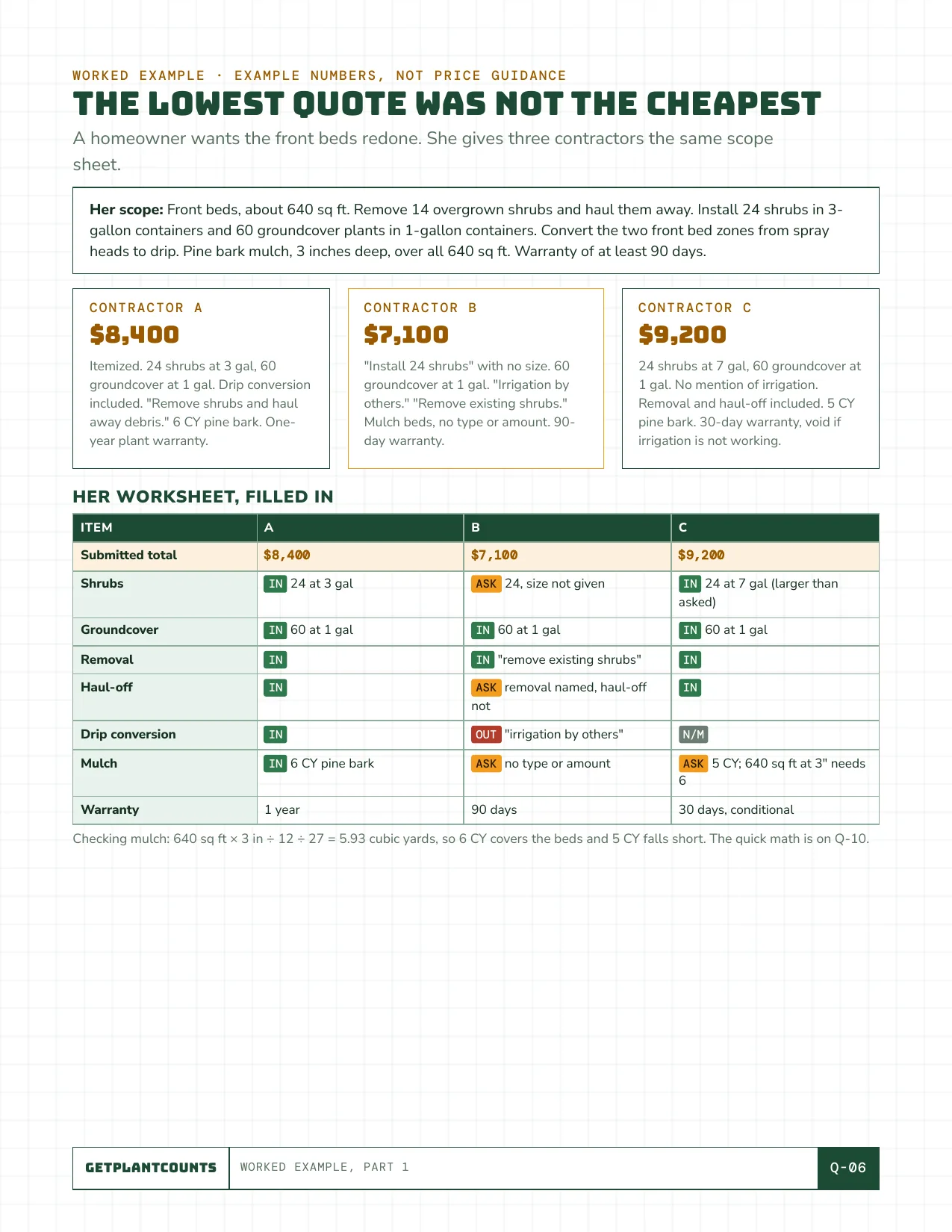
| First quote | Same job, in writing | |
|---|---|---|
| A · 1-year warranty | $8,400 | $8,400 |
| B · lowest · 90 days | $7,100 | $8,625 |
| C · 30 days | $9,200 | $8,925 |
Quote B left out the shrub size, haul-off, the mulch amount and irrigation. Once every quote covered the same job, it cost more than A, with a shorter warranty. Example numbers, for illustration.
How to make quotes comparable
- Give every contractor the same written scope.
- Ask for itemized quotes with plant sizes and exclusions.
- Ask each contractor about their gaps, in writing.
- Compare the confirmed prices, not the first totals.
What to compare besides price
- Warranty. How long, and what voids it. One year versus 90 days can matter more than a few hundred dollars.
- Plant size. Larger plants cost more but fill in a season or two sooner.
- Payment schedule. Payments should follow the work, with the last one after a walkthrough.
- Timeline. When they can start, and how long it takes.
- Changes. How extra work or substitutions get priced, and that they're approved in writing first.
- Insurance and license. Ask for proof of insurance, and any license your city or county requires.
If the prices are still far apart
Once all three quotes cover the same job, a gap that remains is a real price difference. Ask the higher contractor what drives their cost. Sometimes it's a bigger crew that finishes faster, better plant stock, or a warranty they actually honor. Sometimes it's just a higher price, and now you can see it clearly.
Telling the others no
A short note is enough, and it keeps the door open if you need them later:
"Thank you for the quote. We've decided to go with another contractor this time, but I appreciated how clearly you laid it out."